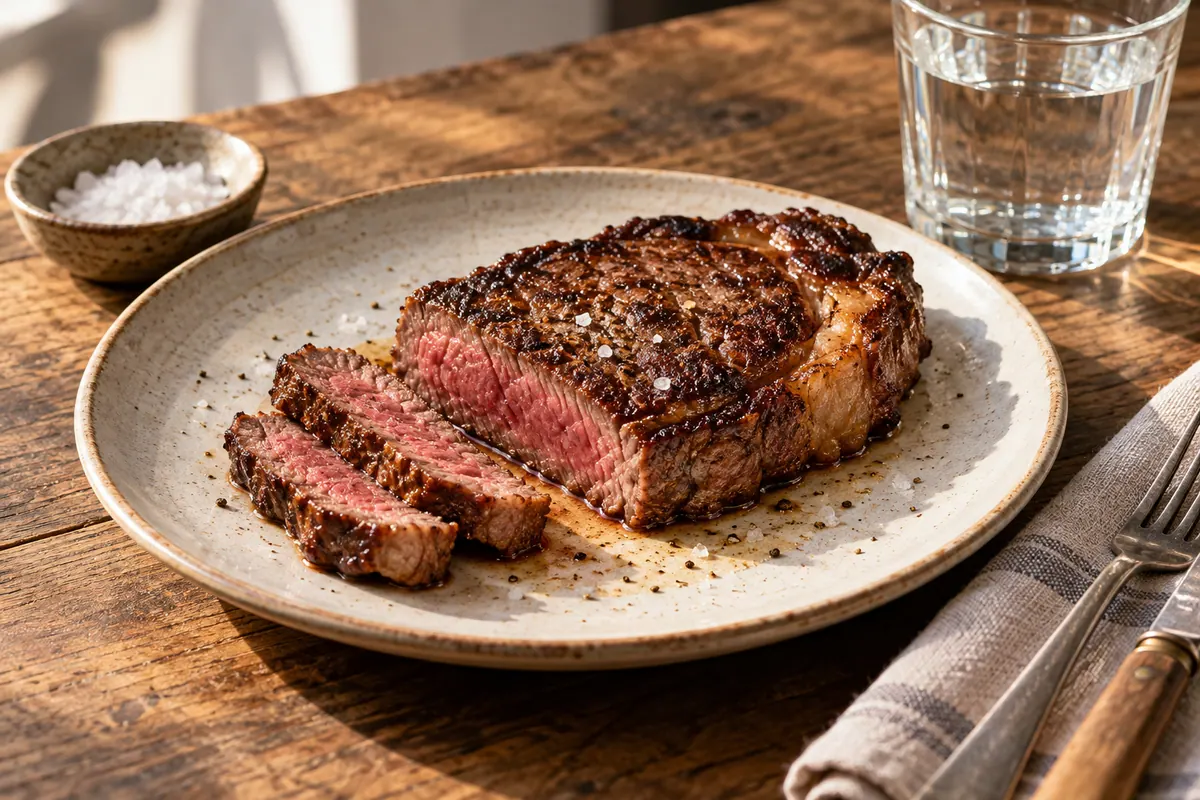
Lion diet and carnivore diet are often discussed together, but the terms are not interchangeable. Carnivore usually describes a pattern based on animal foods. Lion diet usually refers to a particularly narrow version built around ruminant meat, salt and water. Neither label has one universally enforced rulebook.
Understanding the difference is useful when reading a testimonial or researching an approach. Someone eating beef, eggs, salmon and yoghurt is following a different menu from someone eating only beef. A result reported with the first pattern cannot automatically be transferred to the second.
Compare actual foods, not names
Start with a list of what is eaten and what is excluded. Some carnivore descriptions include dairy; others exclude it. Some allow coffee or small amounts of seasonings. Lion descriptions commonly exclude fish, eggs and dairy, as well as plant foods. These distinctions affect shopping, cost, enjoyment and nutrient intake.
They also affect how claims should be interpreted. If an article calls any low-carbohydrate meal plan carnivore, it is not describing the same exposure as an exclusively animal-food diet. If a study involved a mixed diet, it should not be used to claim that ruminant meat alone produces the same result.
Narrower does not mean more effective
A stricter rule can feel more decisive, especially when someone has been struggling with symptoms. However, the number of excluded foods does not demonstrate a treatment effect. Removing another food group is a new change with its own consequences; it is not automatically a meaningful upgrade.
For both patterns, consider what replaces ordinary sources of fibre and how nutritional adequacy will be reviewed. For the narrower pattern, the limited range makes those questions more pressing. A menu can contain protein and still leave important questions unanswered.
Consider everyday sustainability
Imagine a full working week rather than one meal photograph. Can you obtain the foods consistently? What happens at a family celebration? Is food becoming a source of anxiety? How will you handle travel, illness or a change in income? These are relevant questions because a diet is something people live with, not just a theoretical nutrient table.
Cost comparisons should include the complete basket and the foods you would actually buy. Do not use a cheap single meal to imply that an entire pattern is affordable. Nor should you feel obliged to purchase premium cuts, specialist subscriptions or expensive supplements to follow an online identity.
Bring the comparison back to your goal
If your aim is symptom investigation, discuss a structured plan with a clinician or registered dietitian. If your aim is easier cooking, a small repertoire of balanced meals may solve that problem with fewer exclusions. If your aim is weight management, a sustainable approach matters more than how restrictive its name sounds.
Descriptions help you understand the choices. They are not proof that either diet is necessary or suitable for you.
A practical example
Two people compare their results under the heading carnivore. One eats eggs and dairy, has changed exercise habits and has only followed the pattern briefly. The other eats ruminant meat alone and reports different symptoms. A meaningful comparison would first record the actual menus, time period and other changes. Without that detail, the shared diet label conceals more than it explains.
Your next steps
- Make a two-column list of included foods for the versions you are comparing.
- Check whether any cited research tested those exact patterns.
- Identify the extra restrictions and the practical problems they create.
- Ask whether a broader, professionally reviewed plan would meet your real goal.
Sources and scope
Keep exploring
- What is the lion diet? Rules, variations and the questions that matter
- Lion diet nutrition: fibre, variety and potential gaps
- Lion diet and digestion: why persistent symptoms need assessment
- Lion diet, saturated fat and cholesterol: questions to ask
- Moving beyond a very restrictive diet: planning a more varied menu
Keep exploring the practical questions.
Explore the guides